
Why You Can't Think Your Way Out of Trauma
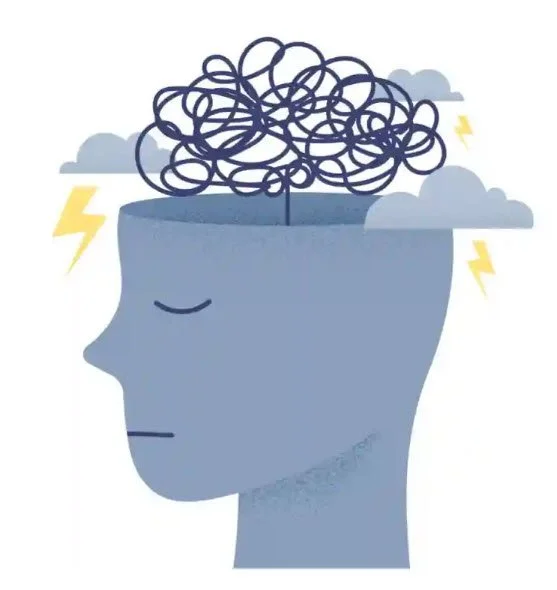
The Limitation of Talk-Therapy
Understanding your wound isn't the same as healing it — here's what actually moves the needle.
You've done the work. You've sat across from therapists, filled journals, and read the books. You understand, probably better than most people, exactly where your pain came from. You can trace it — the childhood moment, the relationship, the loss — with clarity and even a kind of compassion.
And still, something remains. A tightness that won't quit. A pattern that keeps repeating. A part of you that braces for impact even when the danger has long since passed.
If this is you, please know you are not failing at healing. You are bumping up against the limitations of talk therapy.
The Insight Trap
There is something seductive about understanding our pain. It feels like progress — and in many ways, it is. Naming what happened to us, recognizing how it shaped us, even grieving it openly — these are not small things. They matter.
But insight operates at the conscious level. And trauma doesn't live there.
Think of it this way: your conscious mind is the tip of an iceberg. It's the part that reads, reflects, reasons, and understands. But beneath the waterline — vast, largely invisible, running almost everything — is the subconscious mind. And that is where trauma actually lives.
Trauma doesn't file itself neatly in the part of the brain that thinks. It embeds itself in the part that survives. It becomes a pattern, an automatic response, a set of rules the nervous system follows without asking for permission.
You can understand those rules completely, and still be governed by them.
What the Subconscious Is Actually Doing
When something overwhelms us — especially in childhood, when we have almost no context and very few resources — the subconscious makes a decision. Not a conscious one. Not a reasoned one. A survival one.
The world is not safe. I am not enough. Love always comes with pain. If I stay small, I won't get hurt.
These decisions were logical once. They protected someone young and vulnerable who had no other tools. The subconscious was doing exactly what it was designed to do — keeping you alive, keeping you functional, keeping you moving forward.
The problem is, the subconscious is extraordinarily loyal. It doesn't update automatically just because time passes or circumstances change. It keeps running the original program, long after that program has stopped serving you. Long after the danger has passed. Long after you have grown into someone who no longer needs that kind of protection.
This is why you can know, intellectually, that you are safe — and still feel afraid. This is why you can understand that your worth isn't conditional — and still seek approval compulsively. This is why you can recognize the pattern in every relationship — and still repeat it.
The wound isn't in your understanding. It's in the code.
Why Thinking Harder Doesn't Help
Cognitive approaches to healing — and I say this with deep respect for the therapists and practitioners who use them — work at the level of the conscious mind. They help us reframe, reinterpret, and re-examine. They give us language for experiences that were previously wordless. They are genuinely valuable.
But they are working on the screen. The program is running somewhere else.
This is not a flaw in the approach. It's simply a limitation of the territory. The conscious mind, for all its brilliance, cannot reach into the subconscious and update it through logic alone. You cannot think your way into a new nervous system response. You cannot reason yourself out of a pattern that was never formed through reason in the first place.
The science backs this up. Psychoneuroimmunology — the study of how our emotional and psychological states affect our immune system and physical health — has shown us something extraordinary: the body responds not just to what we experience, but to the meaning we assign to what we experience. Meaning the body acts regardless of whether the conscious mind agrees.
When chronic fear, unresolved grief, or a deep belief in one's own unworthiness lives in the subconscious, the body hears it. Inflammation rises. Immune function shifts. The nervous system stays in a state of low-grade emergency — even on a Tuesday morning when everything is technically fine.
This is why healing the subconscious isn't just emotionally important. It's biologically important.
What Actually Changes Things
For nearly two decades, I have sat with people who have tried everything. Trauma survivors who have been in therapy for years. Cancer patients who are doing all the right things and still feel like something is unresolved. High-functioning people who, beneath the competence and the achievements, are running on a foundation of pain.
What I have learned — and what the subconscious work consistently confirms — is this:
The wound doesn't need to be understood. It needs to be met.
And to be met, it needs to be accessed.
In clinical hypnotherapy, we bypass the analytical conscious mind and communicate directly with the subconscious. Not to trick it or override it, but to have an honest conversation with it. To find the original decision, the moment the rule was written, and to offer something the subconscious has been waiting for all along: new information.
The child who decided "I am not lovable" didn't have access to what you know now. The part of you that learned "I must stay vigilant to stay safe" was doing its best with very limited resources. When we go back to that original moment — not just intellectually, but experientially — and offer those parts of ourselves a different perspective, something remarkable happens.
The pattern loses its foundation. Not through force. Not through discipline. Not through years of careful reframing. It simply dissolves. Like ice in warm water.
The Moment Everything Shifts
I worked with a woman — a cancer patient — who had spent her entire life operating from a deep, subconscious belief that she was a burden. She had built her whole personality around it: the helpfulness, the self-erasure, the inability to receive care without guilt. She understood it, intellectually. She had a name for it, a history for it, a therapist who had explored it with her for years.
But in one of our sessions together, something shifted. She felt it before she could name it.
Afterward, she looked up and said, "I think I've been punishing myself my whole life for something that was never my fault."
That wasn't a new idea. Intellectually, she had arrived at that conclusion before. But this time, she felt it was true. In her body. In her nervous system. In the part of her that actually runs the show. That is the difference between understanding a wound and healing it.
You Are Not Broken. You Are Organized Around a Wound.
If you have spent years trying to think your way through something that won't move — if you have the insight but not the relief — I want you to hear this:
There is nothing wrong with you. Your mind did exactly what it was meant to do. It found a way to survive something that felt unsurvivable. It built a system, and it has faithfully run that system ever since.
But you are allowed to update the system. You are allowed to go beneath the surface — not with a sledgehammer, but with curiosity and compassion — and offer your subconscious something it has been waiting for.
A different story. A different meaning. A different ending.
Healing isn't about understanding yourself better. It's about reaching the part of you that understanding alone has never been able to touch. That part of you is ready. It has always been ready.
About the Author:
Avinoam Lerner is a cancer and trauma recovery specialist with 25 years of practice in Boston, MA. He is the author of The New Cancer Paradigm and Mindful Remission, and his work is grounded in psychoneuroimmunology and the science of mind-body healing. AvinoamLerner.com
To learn more or apply, visit avinoamlerner.com/rapid-trauma-solution.