
Helplessness, hopelessness: two feelings your body listens to
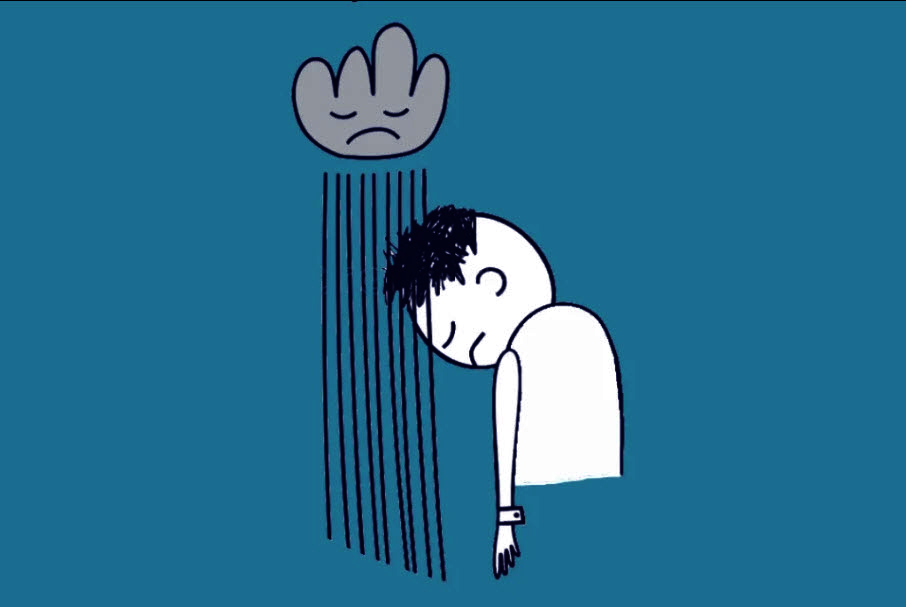
You Can Resolve It with Your Own Two Hands
There are two feelings that tend to show up in treatment. They rarely announce themselves. They arrive quietly, usually late at night, and they sound something like this:
Nothing I do makes any difference.
And nothing is going to get better.
If you've felt either one — or both — on the same afternoon, please hear this first: you are not doing this wrong. Helplessness and hopelessness aren't weaknesses or a failure of attitude. They are two of the most human responses to a situation you did not choose and cannot fully control.
But they aren't only feelings. And that's the part worth knowing… because it's exactly where you get some room to move.
Your nervous system is listening
The science of psychoneuroimmunology — PNI — took apart an old idea: that what happens above the neck stays there, sealed off from the body doing the hard work of healing. It turns out the mind and the immune system are in constant conversation. And of all the states PNI has looked at, helplessness and hopelessness speak to that system the loudest.
Here's roughly how the conversation goes. When you feel that your actions don't matter and your future won't change, the body reads it as a threat with no escape. The stress axis — the brain-to-adrenal gland pathway — stays switched on. Cortisol, meant to rise and then fall, fails to fall on time. And when cortisol stays high for too long, its calming, anti-inflammatory signal starts to lose its grip.
Read that gently. It doesn't mean your feelings are harming you. It means your feelings are information — and the body is a very good listener.
Which raises a simple, hopeful question. If these states send a signal… is there a way to send a calmer one back? On purpose. With something you can do yourself, in the chair, in the waiting room, at 2 a.m.?
There is. And it's quieter and stranger and simpler than you'd expect.
Meet the practice of tapping, also known as EFT
It's called EFT — Emotional Freedom Techniques, or just tapping. You use your own fingertips to tap lightly on a series of points on the face and hands while you name, out loud and honestly, what you're actually feeling.
I know. On paper it sounds like nothing. That was my reaction too, years ago. Then I looked at what happens in the body when people do it.
In a randomized controlled trial, one hour of tapping lowered cortisol — that master stress hormone — by roughly 24%, compared with about 14% for an hour of talk therapy or an hour of rest. The finding was later replicated by an independent research team. And a meta-analysis of tapping for anxiety found consistent, meaningful reductions. This isn't magic, and it isn't "energy." Here's the likely mechanism, in plain terms: you're pairing the memory of something distressing with a steady, calming physical signal — which teaches an over-alarmed nervous system that this moment is safe enough to stand down.
And notice what that does to both our feelings at once. Helplessness says I can't do anything. Tapping is a thing you can do — with your own two hands, no one's permission, no equipment. Hopelessness says nothing will change. And under your fingertips, something measurable changes: your body's stress chemistry, in minutes.
That's the part that moves me. This isn't a tool for treating cancer — your oncology team is doing that, and nothing here replaces a word of it. This is a tool for treating the stress state the illness pours over everything. It works alongside your medicine, on the part your medicine was never meant to reach: you.
What a round actually feels like
So you can picture it, here's the shape of a single round — not the whole method, just a taste:
1. Name it, plainly. You put words to what's true right now — this scan has me terrified — instead of pushing it down. Naming a feeling already begins to settle the alarm behind it.
2. Tap, and stay with it. You tap gently through the points while you keep speaking honestly about the fear. You're not arguing with it. You're keeping it company while your body quiets.
3. Check in, and go again. You notice where the feeling sits now — often a notch lower — and take another pass if you need one.
That's it. Deceptively simple. Which is exactly why doing it well is its own quiet skill.
Learning EFT properly
Here's the honest truth about tapping. Almost anyone can pick up the outline in ten minutes. But the difference between tapping at a feeling and tapping through it — knowing what to say, where to aim it, how to work with the fear underneath the fear — that's the part that takes real teaching. It's the difference between a technique you dabble in and a practice you can actually lean on when the night gets long.
That's why I built the Successful EFT course — to walk you through it, step by step, in your own time, until it's genuinely yours. So that the next time one of those two feelings shows up uninvited, you don't just sit with it. You have your own two hands, and you know what to do with them.
And my point is…
You can't always change the situation. But you can, it turns out, change the signal your body is sending about it — and that alone can loosen the grip of nothing I do matters, and nothing will get better.
If you're ready to learn a real, practical way to do that, I'd love to show you how. Come learn to tap with me — gently, at your pace.
Your treatment is doing its part. This can be yours.