
When There's No One in the Waiting Room with You
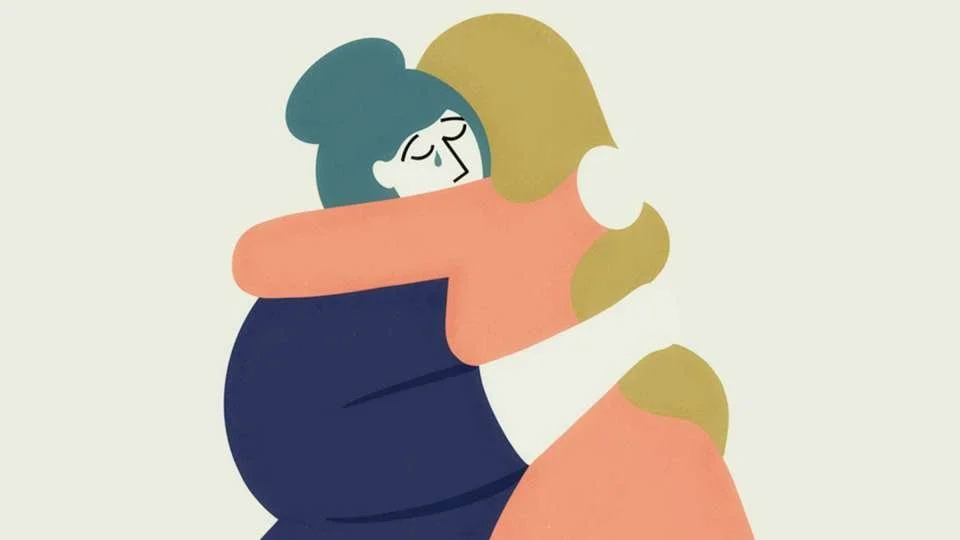
What Can We Do When We’re Going Through It Alone?
A client recently shared that while she sat in the waiting room, she noticed that everyone else had someone with them, someone who held their hand, while hers sat empty because she had no one to support her.
She wasn’t complaining. She simply stated, “I don’t have anyone who can support me in this way, and I know that support is important.” According to research, she’s right. Support is very important, and not all of us have it.
Going through treatment alone
If you do not have this kind of support. If, after saying the word "cancer" out loud for the first time, you’ve heard only silence. If you've caught yourself apologizing for needing help, as though needing it were a failure rather than a circumstance; if you've smiled through an appointment, driven yourself home, and cried alone in the car so no one would have to carry it for you, please keep reading.
What you're actually carrying
Most of what's written about cancer assumes a village: a partner who drives you to infusions, a sister who researches your oncologist, and a group text that lights up the moment there's news. When that village doesn't exist, you're not just facing a diagnosis. You're facing it while doing the work that a village would normally absorb.
You're the one translating the pathology report at midnight because no one else is awake to ask. You're the one deciding, alone, whether today's fatigue is normal or something to call about. You're the one who has to be brave in front of people because there's no one behind the scenes to be afraid in front of. That's a second job, layered on top of the first, and it's exhausting in a way that's hard to explain to someone who has never had to do it.
There's grief in this too, and it deserves to be named plainly. Maybe the family who should be here is estranged, gone, or simply unable to show up the way you need. Maybe the friends who love you don't know what to say, so they say nothing, and their silence lands like absence, even though it isn't meant to. You are allowed to grieve the support that should exist but doesn't. That grief is not weakness, and it is not a verdict on your worth.
The absence of a support system around you isn’t evidence that life isn’t worth living. It's the result of circumstances, geography, family history, and a culture that scatters people across cities. The truth is, we’re not taught how to show up when someone's ill. There was never a class in high school about it, which may explain why it’s such a confusing task.
Why this matters, and why it isn't the whole story
If you’ve read my blog posts before, you’ll recognize the term Psychoneuroimmunology, which is the study of how our thoughts and emotions interact with the nervous and immune systems.
When you're feeling isolated, your system has to regulate stress with fewer outside resources to draw on. Research increasingly suggests that a felt sense of connection is one condition that supports the body's capacity for healing and recovery, alongside sleep, nutrition, and movement.
That is not the same as saying loneliness causes illness or that connection guarantees an outcome. It doesn't, and no one can promise you that it does. What it does mean is that building connection, in whatever form is available to you, is not a soft extra. It's part of the physiological ground you stand on while your medical team does the clinical work. One supports the other. Neither replaces the other.
Redefining what support actually means
Here's the shift that matters: support was never meant to come from a single source. Even people with large families rarely get everything they need from blood relatives alone.
What we need is a portfolio of several sources, each holding one piece. One piece is informational: someone who can help you understand test results and ask the doctor the questions you're too tired to think of. That might be a patient advocate, a nurse navigator, a practitioner like myself, or a cancer support organization, and most hospitals have one on staff whether or not anyone told you. Another piece is logistical: rides, meals, someone to sit in the room during an infusion so you're not doing it in silence. This is often easier to find than emotional support, because people who don't know what to say will still show up to drive you. Let them.
Still, another piece is emotional, and this is the one that people without family nearby assume they can't have. A support group, in person or online, made up of people who are also living this, can hold what your friends can't, because they don't need it explained. A therapist or a coach who works alongside your medical team can become a steady, scheduled place to put down what you've been carrying alone. This kind of relationship doesn't require blood ties or a long history. It requires only that someone shows up on purpose, consistently, and that's a real form of support, not a lesser one.
Last but not least, the one piece most easily overlooked is the relationship you have with yourself. When no one else is in the room, the way you speak to yourself becomes the room. Practicing a steadier internal voice, one that meets fear with steadiness instead of judgment, is not a consolation prize for not having other people. It's a form of support you can build deliberately, and it's one that stays with you no matter who else comes and goes.
The practice of asking
One more thing worth mentioning here: vague requests rarely get answered, and specific ones almost always do. "I wish someone would help me" asks a lot of a person who doesn't know what help looks like. "Can you sit with me during my infusion on Tuesday at two?" gives them something they can actually say yes to. People who feel awkward about cancer often want to help and don't know how. Specificity removes the guesswork, and it removes it for you too, because you stop waiting for someone to read your mind.
My whisper to you is to start small, with one piece of the portfolio at a time. A single call to a support line. One message to a cancer center's social worker. One honest conversation with a friend, telling them exactly what would help this week. None of it has to happen all at once, and none of it has to look like what a family would have done. It only has to be real, and it only has to be yours.
You are not facing this because no one loves you. You are facing it because the people who were supposed to be here couldn't be, for reasons that were never within your control. That's the truth of your circumstance. It is not the truth of your worth, and it is not the end of the story.
Let's start building the room around you, one piece at a time.
Avinoam Lerner is a cancer and trauma recovery specialist with 25 years of practice in Boston, MA. He is the author of The New Cancer Paradigm and Mindful Remission, and his work is grounded in psychoneuroimmunology and the science of mind-body healing.AvinoamLerner.com